
TF | THERMOFORMING
HIGH QUALITY, COST-ATTRACTIVE AND FAST.The proven technology for durable plastic components, offering high design freedom and short development cycles.
Thermoforming of Plastics – Reliable Series Production with Proven Expertise
We are an experienced manufacturer specializing in the thermoforming of plastic cladding components, with over 40 years of expertise in industrial series production. Within our global production network, we operate more than 20 modern thermoforming systems.
We manufacture high-quality plastic claddings for demanding applications, including the caravan, agricultural machinery, and construction machinery industries.
Thanks to a high level of vertical integration, advanced thermoforming technology, and standardized processes, we ensure consistent quality, reproducible series production, and high delivery reliability – from small series to large-scale production.
We are an experienced manufacturer specializing in the thermoforming of plastic cladding components, with over 40 years of expertise in industrial series production. Within our global production network, we operate more than 20 modern thermoforming systems.
We manufacture high-quality plastic claddings for demanding applications, including the caravan, agricultural machinery, and construction machinery industries.
Thanks to a high level of vertical integration, advanced thermoforming technology, and standardized processes, we ensure consistent quality, reproducible series production, and high delivery reliability – from small series to large-scale production.
- COST-EFFICIENT
PROCESS - Modern &
HIGH-CLASS
SURFACES - SUSTAINABLE
Materials - SHORT
DEVELOPMENT times
What Is Thermoforming?
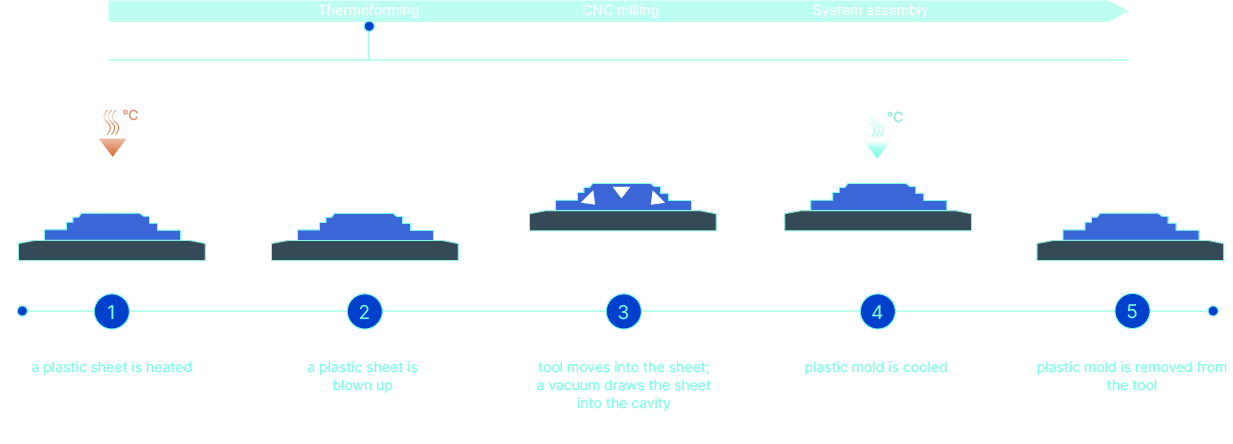
Thermoforming of plastics is a thermoforming process in which preheated plastic sheets are precisely shaped using vacuum. It enables the cost‑efficient production of stable plastic components with a high degree of design freedom.
The process is particularly suitable for medium production volumes, short development cycles, and complex or large‑surface components with high‑quality visible surfaces—such as claddings, covers, and interior and exterior parts.
Sustainability in Focus
All thermoformed components and production scrap are 100% recyclable, making thermoforming a resource‑efficient and sustainable plastic processing method.
Thermoforming of plastics is a thermoforming process in which preheated plastic sheets are precisely shaped using vacuum. It enables the cost‑efficient production of stable plastic components with a high degree of design freedom.
The process is particularly suitable for medium production volumes, short development cycles, and complex or large‑surface components with high‑quality visible surfaces—such as claddings, covers, and interior and exterior parts.
Sustainability in Focus
All thermoformed components and production scrap are 100% recyclable, making thermoforming a resource‑efficient and sustainable plastic processing method.
How does the Thermoforming-Process works?
Thermoforming in real life
At the BMW Group, sustainability and resource conservation are moving centre stage. In close cooperation, new materials were sought in order to make existing car boot mats more sustainable. Thermoforming continues to be used in production in order to fulfil customer requirements as usual.
Quote Title
The long-term partnership with PARAT Technology is a prime example of joint success in terms of sustainability and innovation.
Purchasing Manager -
BMW Group

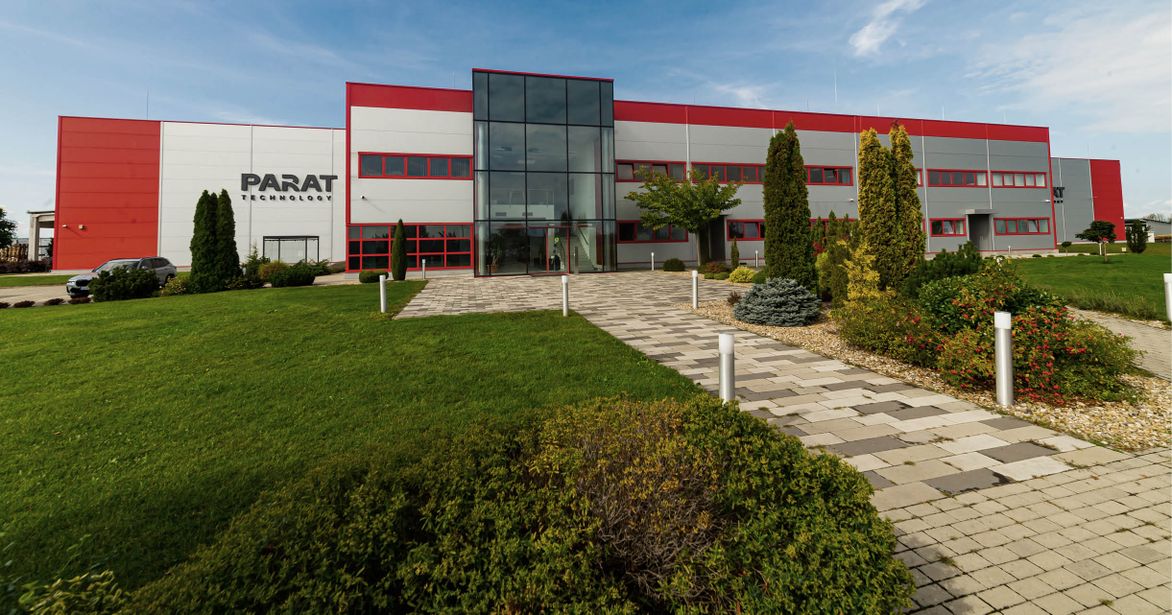
PARAT IS THE PERFECT PARTNER
locations in Europe and Asia with TF machines
modern machines for thermoforming
years of experience in thermoforming
Partnership from beginning to end
PARAT Technology is the safe choice for your project - we are at your side every step of the way, from the idea to the market launch.Our modern systems and the concentrated expertise of our employees guarantee first-class results at all times.

FULL-SERVICE PARTNER

Extensive Know-How

Modern
Machines

High supply
Reliability

FAQ about Thermoforming
We process a wide range of thermoplastic materials, including ABS, ABS/PMMA, ABS/PC/PMMA, PS, PE and PP. The material selected depends on the requirements of the specific project, such as UV stability, impact resistance, chemical resistance or the desired surface properties.
-
Which materials are used in thermoforming?
We process a wide range of thermoplastic materials, including ABS, ABS/PMMA, ABS/PC/PMMA, PS, PE and PP. The material selected depends on the requirements of the specific project, such as UV stability, impact resistance, chemical resistance or the desired surface properties.
-
What is the maximum component size that can be produced?
The maximum size of a component is approximately 2800 × 1800 mm and is limited by the available machinery and equipment. Larger components can be realized through intelligent multi‑part designs.
-
Can thermoformed parts be recycled?
Yes. Thermoformed parts consist of 100% thermoplastic materials that can be recycled and reused for new applications at the end of their lifecycle. Production scrap is largely regranulated and returned to the material cycle.
-
Which wall thicknesses can be achieved in thermoforming?
Yes. Thermoformed parts consist of 100% thermoplastic materials that can be recycled and reused for new applications at the end of their lifecycle. Production scrap is largely regranulated and returned to the material cycle.
-
What applications is thermoforming particularly suitable for?
Thermoforming is particularly suitable for large visible and functional components such as exterior and interior parts for commercial vehicles, agricultural machinery, motorhomes and caravans. Its high design freedom also makes it ideal for visually demanding surfaces.
-
How quickly can thermoformed components be produced?
Thermoforming offers short development and tooling lead times. From initial design to a series‑ready component, only a few weeks are typically required depending on the complexity of the project, enabling very fast time‑to‑market.
-
Why are tooling costs for thermoformed components competitive?
The thermoforming process requires only one forming tool half, which significantly reduces both material usage and machining effort — resulting in very economical tooling costs.